A complete guide to understanding how digital twins levels evolve, and how to build them step by step.
Table of Contents
What Is a Digital Twin?
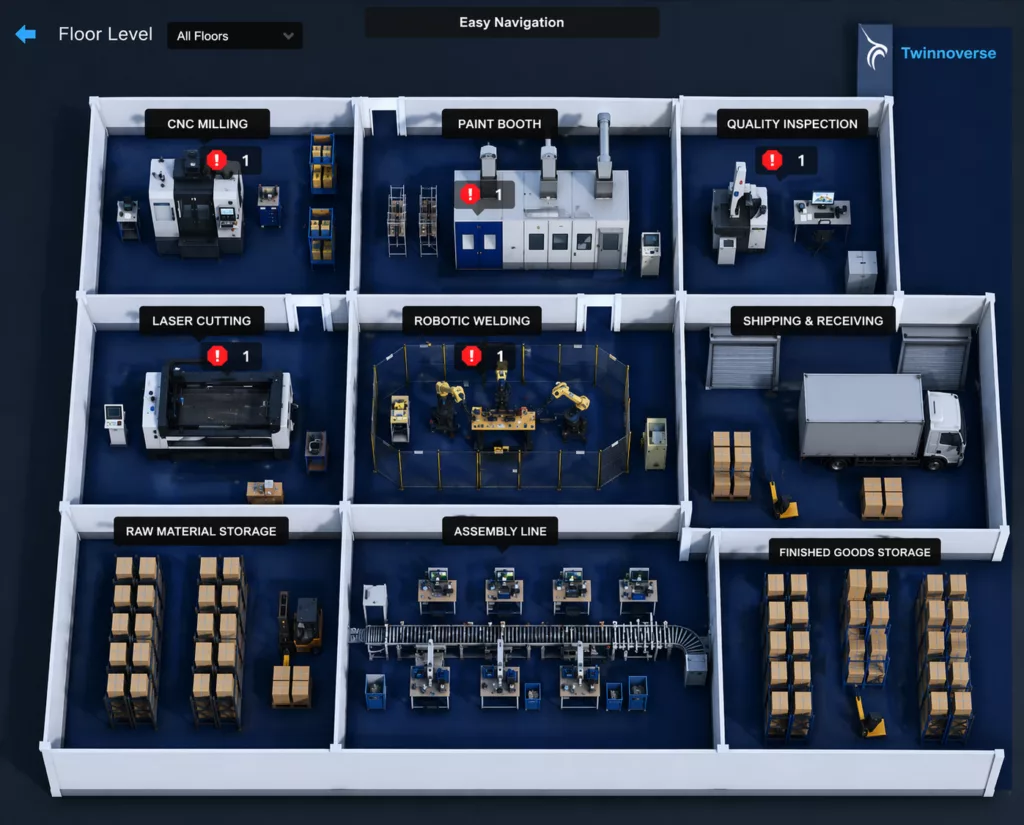
A digital twin is a virtual representation of a physical asset, system, or environment.
At its simplest, it can be a 3D model. At its most advanced, it becomes a living system that:
- Receives real-time data
- Analyzes behavior
- Predicts outcomes
- Acts autonomously
The key difference lies in how mature the digital twin is.
Why Digital Twin Levels Matter
Not all digital twins are equal.
Many teams believe they have a digital twin when they only have a static 3D model. Others jump into complex systems without building a proper foundation.
Understanding digital twin levels helps you:
- Identify your current stage
- Avoid overengineering too early
- Plan a scalable architecture
- Unlock real ROI progressively
Digital Twin Levels Explained (Overview of the 5 Stages)
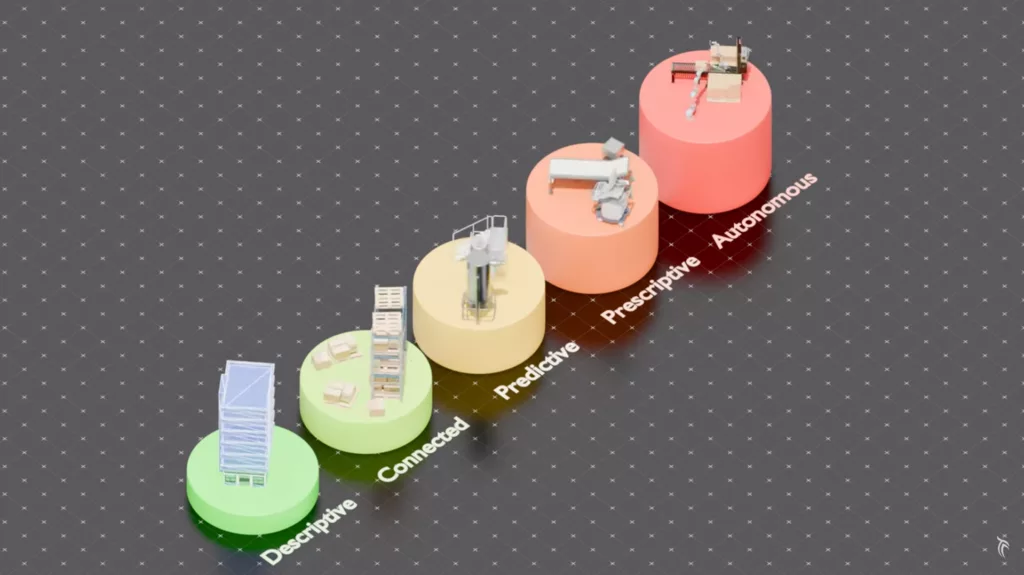
Digital twins evolve through five distinct levels:
| Level | Name | Core Capability |
|---|---|---|
| Level 1 | Descriptive Twin | Static digital representation |
| Level 2 | Connected Twin | Real-time data integration |
| Level 3 | Analytical Twin | Data analysis & insights |
| Level 4 | Predictive Twin | Forecasting & simulation |
| Level 5 | Autonomous Twin | Self-optimizing system |
Why Digital Twin Levels Matter for Businesses
Level 1: Descriptive Digital Twin
A precise digital replica of a physical asset, typically in 3D form.
It is static, meaning it does not include real-time data.
👉 Read more: descriptive-digital-twin
Level 2: Connected Digital Twin
This level introduces real-time data from sensors and systems.
The twin becomes dynamic and reflects live conditions.
👉 Read more: connected-digital-twin
Level 3: Predictive Digital Twin
At this stage, the system starts generating insights from data.
Dashboards, KPIs, and analytics become central.
👉 Read more: predictive-digital-twin
Level 4: Prescriptive Digital Twin
The twin uses historical and real-time data to forecast future behavior.
👉 Read more: prescriptive-digital-twin
Level 5: Autonomous Digital Twin
The most advanced level.
The system can make decisions and act automatically.
Digital Twin Maturity Comparison
Understanding the differences between levels is critical:
| Feature | Descriptive | Connected | Analytical | Predictive | Autonomous |
|---|---|---|---|---|---|
| Data | Static | Real-time | Processed | Historical + AI | Continuous |
| Interaction | Visual only | Monitoring | Insights | Forecasting | Decision-making |
| Complexity | Low | Medium | Medium-High | High | Very High |
| Value | Reference | Visibility | Optimization | Planning | Automation |
Real-World Applications Across Industries
digital twin levels are used across multiple sectors:
Manufacturing
- Machine modeling
- Production line visualization
- Equipment monitoring
Architecture & Construction
- BIM-based building models
- Structural visualization
- Design validation
Smart Cities
- Urban planning
- Infrastructure simulation
- Traffic modeling
Energy & Utilities
- Grid monitoring
- Asset tracking
- Load optimization
Healthcare
- Organ modeling
- Surgical planning
- Patient-specific simulations
How Digital Twins Are Built
A digital twin is not just a 3D model, it’s a system.
Typical components include:
1. 3D Modeling Layer
- CAD / BIM tools
- Geometry and structure
2. Data Layer
- Sensors (IoT)
- Databases
- APIs
3. Integration Layer
- Data pipelines
- Real-time connections
4. Visualization Layer
- Dashboards
- 3D environments
- User interfaces
5. Intelligence Layer (Advanced Levels)
- Analytics
- Machine learning
- Automation
Tools & Platforms for Digital Twins
Building digital twins requires the right tools.
Platforms like Twinnoverse help you:
- Create interactive 3D dashboards
- Structure your digital twin architecture
- Integrate data progressively
- Scale from Level 1 to Level 5
Frequently Asked Questions
What are the levels of a digital twin?
Digital twins evolve through five levels: descriptive, connected, analytical, predictive, and autonomous.
Is a digital twin always real-time?
No. Only higher levels include real-time data. A descriptive twin is static.
What is the first step in building a digital twin?
Creating a digital representation (Level 1: Descriptive Twin).
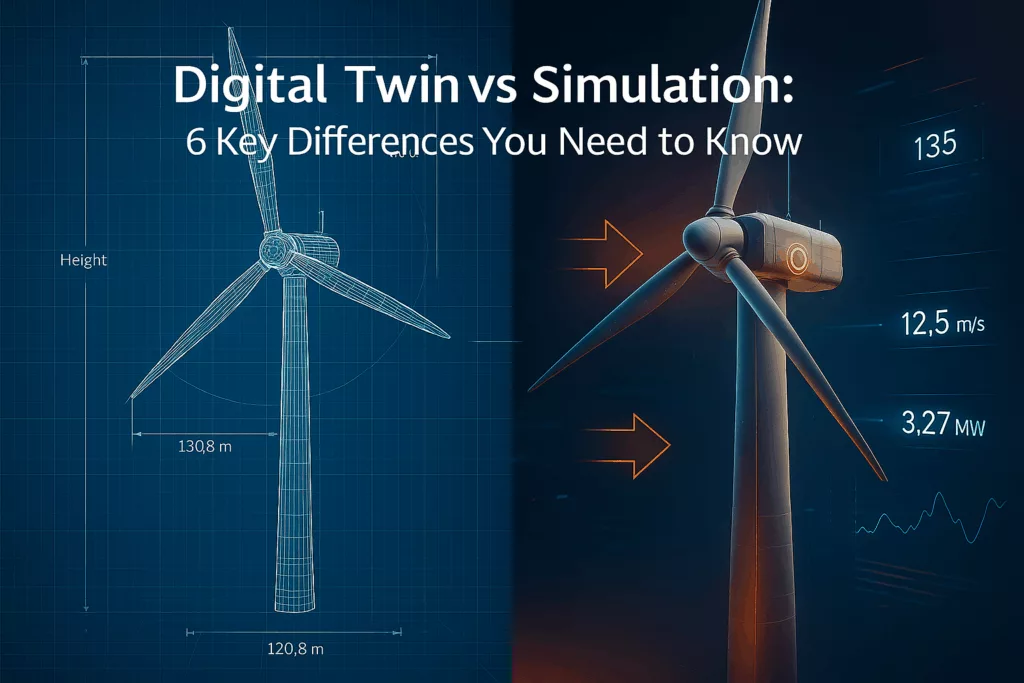
What is the difference between a digital twin and a simulation?
A simulation models scenarios, while a digital twin reflects a real-world asset and can update continuously.
Start Your Digital Twin Journey
Every advanced digital twin starts with a simple step:
Digital twin levels define how a digital twin evolves from a simple static model into an intelligent, autonomous system.A clear and accurate representation of your physical system.
From there, you can progressively add:
- Data
- Intelligence
- Automation
If you’re building your own digital twin system, platforms like Twinnoverse can help you move from concept to deployment faster.