Discover how a digital twin model works, why it starts as a static 3D representation, and how it evolves into advanced digital twin systems.
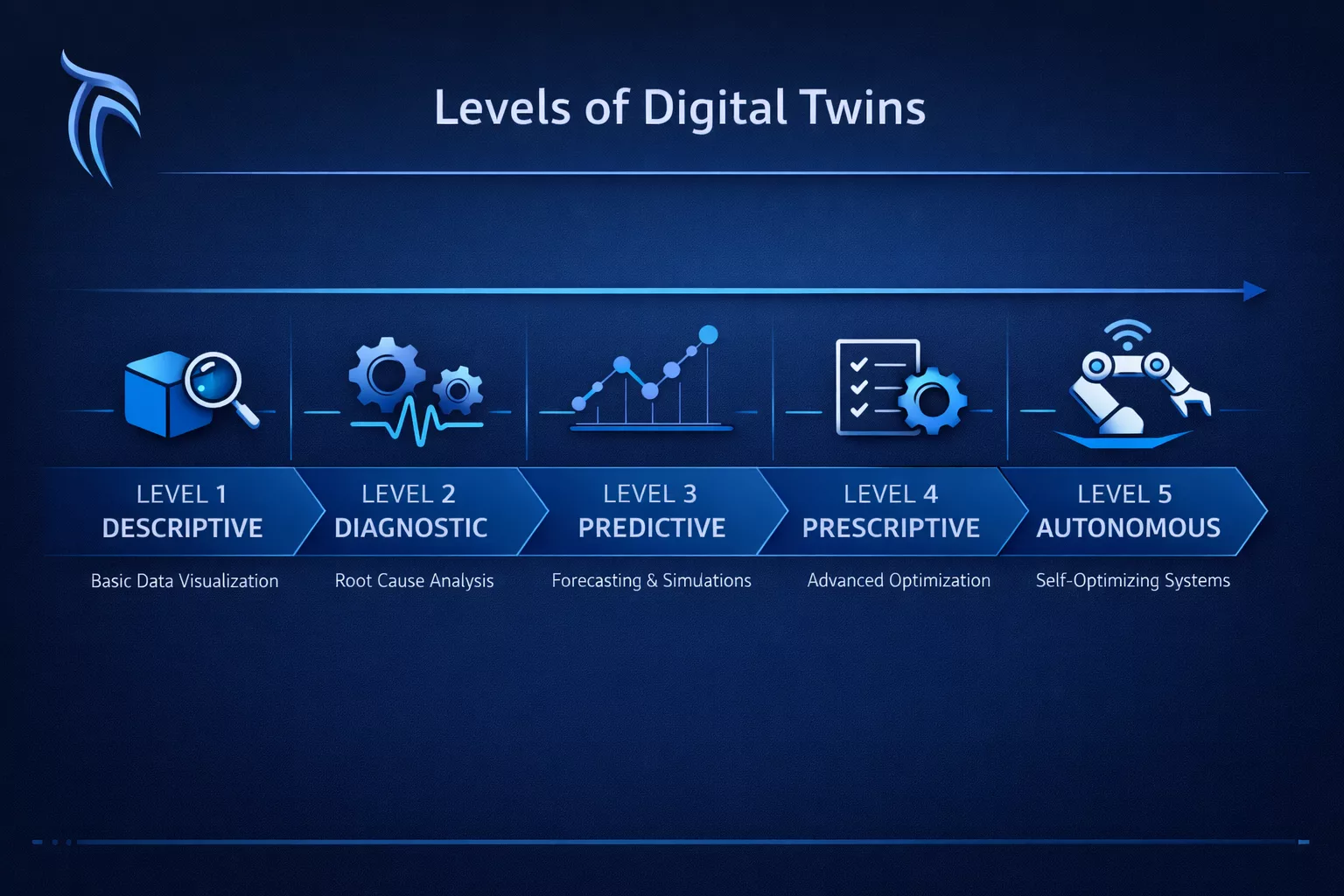
Table of Contents
What Is a Digital Twin Model?
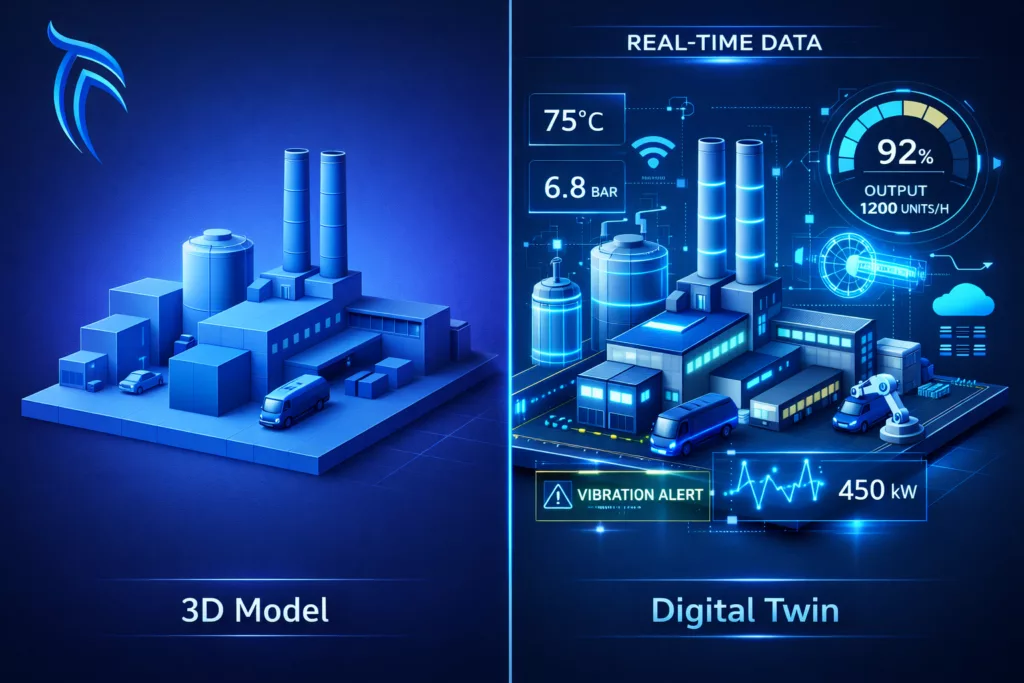
A digital twin model is the foundation of any digital twin system.
At its core, it is a virtual representation of a physical asset, typically built as an interactive 3D model. This model mirrors the real-world structure, geometry, and components of the asset.
At Level 1, this model is static, meaning it does not yet include real-time data or system behavior. It serves as a visual and structural reference that enables further development into more advanced digital twins.
Understanding this first stage is critical, because every advanced digital twin, from real-time monitoring to AI-driven automation, starts here.
Watch: Level 1 Descriptive Twin Explained
What Is a Descriptive Digital Twin?
A descriptive digital twin is the first level of a digital twin.
It focuses on accurately replicating a physical object in digital form, usually through a detailed 3D environment. This representation allows users to explore, visualize, and understand the structure of the asset.
However, at this stage:
- There is no real-time data connection
- No analytics or predictions
- No automated behavior
It is purely representational, not operational.
Key Characteristics of a Digital Twin Model
At Level 1:
- 3D visualization
- Accurate geometry and structure
- Interactive navigation
- Static data (no live updates)
- No integration with IoT or sensors
This makes it ideal for visualization and planning, but limited for real-time decision-making.
Real-World Examples Across Industries
Architecture & Construction
A BIM-based 3D model of a building showing materials, layout, and structure.
Manufacturing
A digital twin model of a machine used for design validation before deployment.
Smart Cities
Urban planning models used to visualize infrastructure and city layouts.
Healthcare
3D representations of organs for study and simulation.
These examples highlight how a 3D digital twin provides value even without live data.
How a Digital Twin Model Is Built
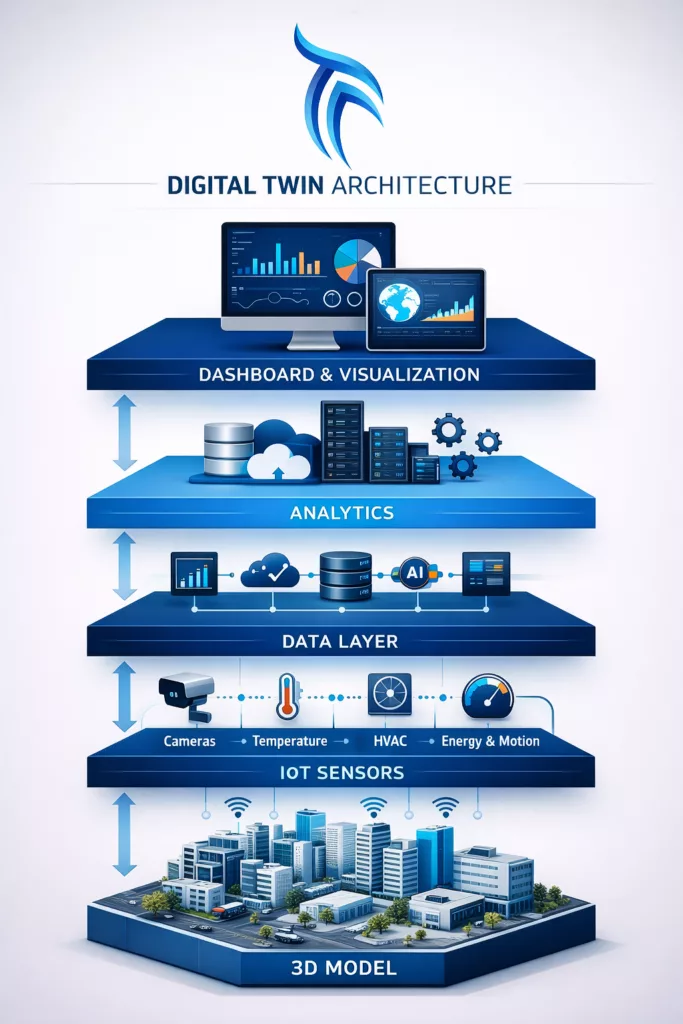
Creating a digital twin model typically involves:
1. 3D Modeling
Using CAD or BIM tools to create the structure and geometry.
2. Asset Structuring
Organizing components and relationships within the model.
3. Visualization Layer
Rendering the model in an interactive interface or dashboard.
At this stage, no data pipelines or sensor integrations are required.
Limitations of a Static Digital Twin
While useful, a descriptive digital twin has clear limitations:
- Cannot reflect real-time conditions
- No performance monitoring
- No predictive capabilities
- Limited decision support
This is why it is considered a starting point, not a complete solution.
How to Move to Level 2
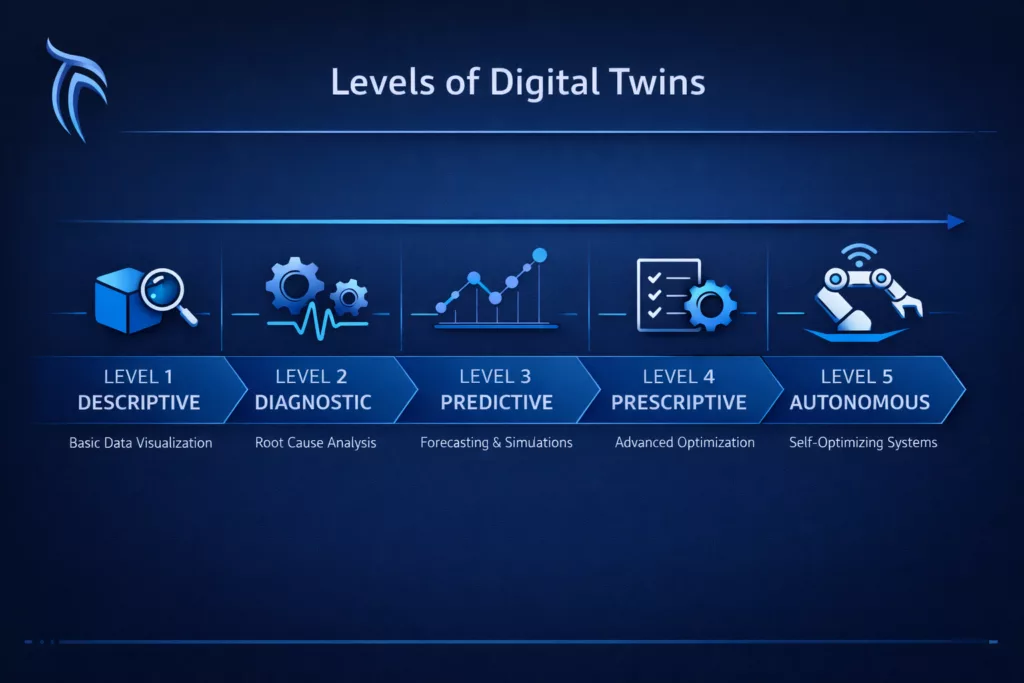
The next step is transforming a static model into a connected digital twin.
What changes?
- Integration with IoT sensors
- Real-time data streaming
- Live system monitoring
What happens when your digital twin model starts receiving real-time data and becomes a live system?
→ Discover Level 2: Connected Digital Twin
Tools for Building Digital Twin Models
Platforms like Twinnoverse help you:
- Create interactive 3D digital twin
- Build dashboards for visualization
- Prepare your system for real-time data integration
For broader industry context, companies like siemens and nvidia are also advancing digital twin technologies.
Frequently Asked Questions
What is a digital twin model?
Is a virtual representation of a physical asset, typically built as a 3D model.
Is a digital twin model always real-time?
No. At Level 1, it is static and does not include real-time data.
What is a descriptive digital twin?
It is the first level of a digital twin, focused on accurate digital representation without live data.
What tools are used to build a digital twin model?
CAD, BIM tools, and platforms like Twinnoverse are commonly used.
Final Thoughts
Every advanced digital twin starts with a simple step:
Building an accurate model.
This foundational layer enables everything that comes next, from real-time monitoring to predictive intelligence and automation.